
Key Takeaways
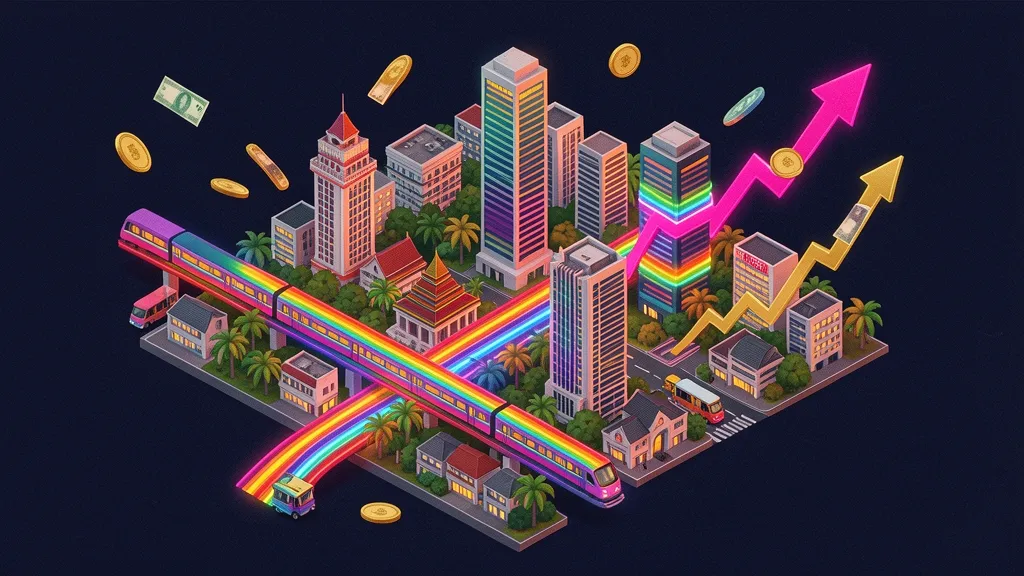
- ✓Thailand's Pink Economy exceeds THB 210 billion annually — larger than the revenue of many SET50 companies — and is growing at 8-12% year-over-year.
- ✓40% of Thai LGBTQ+ consumers switched brands in the past 12 months based on a company's DEI track record, demonstrating the direct commercial impact of inclusion.
- ✓Companies with inclusive workplace policies experience 23% lower employee turnover, translating to millions in saved recruitment and training costs annually.
- ✓Gen Z will constitute 35% of Thailand's workforce by 2027 and ranks workplace inclusion in their top 3 employer selection criteria — companies that fail to act will lose the talent war.
- ✓The "do nothing" cost is rising exponentially: ESG screening, EU supply-chain due diligence, and social-media brand risk make inaction the riskiest strategy of all.
There is a phrase we use at PrideShow that summarises everything we believe about the relationship between LGBTQ+ inclusion and business performance: the Inclusion Dividend. It is not a slogan. It is a thesis — a testable, data-backed claim that inclusion is not charity, not corporate social responsibility theatre, and not a political statement. It is competitive advantage, measurable in revenue, retention, and reputation. And in Thailand in 2026, the evidence is overwhelming.
This article presents the business case for LGBTQ+ inclusion in the Thai market with the rigour that a CFO or board director would demand. We draw on global research from McKinsey, Boston Consulting Group, and the Human Rights Campaign, and we layer in Thailand-specific data from PrideShow's own research, UNDP Asia-Pacific, the Thai Chamber of Commerce, and the National Economic and Social Development Council. Every claim is sourced. Every number is contextualised. Every recommendation is actionable.
If you are a Thai business leader who has been told that DEI is a "nice to have" — a Western import, a Gen Z fad, or a PR exercise — this article will change your mind. Not through moral argument, but through mathematics.
The Global Evidence Base
Before we examine the Thai market specifically, it is worth grounding the discussion in the global research that has established the link between diversity, inclusion, and business performance. This is not a new field — the first rigorous studies were published over two decades ago — but the evidence has become progressively more robust and the effect sizes more difficult to dismiss.
McKinsey's Diversity Dividend
McKinsey's "Diversity Wins" series — spanning reports in 2015, 2018, 2020, and the most recent 2023 update — is the largest longitudinal study of the relationship between workforce diversity and financial performance. The 2023 update, covering over 1,200 companies across 23 countries, found that companies in the top quartile for ethnic and cultural diversity were 39% more likely to outperform their peers on profitability. For gender diversity, the figure was 25%. While the study does not isolate LGBTQ+ inclusion as a standalone variable, it consistently finds that companies with the broadest range of diversity indicators outperform those with narrow or performative diversity programmes.
39%
More likely to outperform on profitability
Companies in the top quartile for diversity — McKinsey Diversity Wins 2023
The HRC Corporate Equality Index
The Human Rights Campaign's Corporate Equality Index (CEI) rates major US companies on LGBTQ+ workplace policies. Credit Suisse's "LGBT 350" index, which tracks publicly listed companies with strong LGBTQ+ inclusion metrics, has outperformed the MSCI ACWI (All Country World Index) by 3.2 percentage points annualised over the past decade. An investor who put USD 10,000 into the LGBT 350 in 2013 would have approximately USD 4,800 more than one who invested in the broad market index.
This outperformance is not accidental. Companies that invest in LGBTQ+ inclusion tend to be better managed overall — they attract and retain superior talent, they make decisions based on evidence rather than prejudice, and they respond faster to changing consumer preferences. LGBTQ+ inclusion is not the cause of outperformance; it is a marker of the kind of management quality that drives outperformance.
BCG's Innovation Premium
Boston Consulting Group's 2023 "Diversity and Innovation" study surveyed over 1,700 companies across eight countries and found that companies with above-average diversity on their management teams reported innovation revenue — the share of total revenue from products and services launched in the past three years — that was 19 percentage points higher than companies with below-average diversity. When LGBTQ+ inclusion was specifically measured as part of the diversity mix, the innovation premium rose to 20%.
20%
Higher innovation revenue
Companies with LGBTQ+-inclusive diversity — BCG Diversity & Innovation 2023
The mechanism is straightforward: diverse teams challenge assumptions, bring different perspectives to problem-solving, and are less prone to groupthink. A product team that includes openly LGBTQ+ members is more likely to identify market opportunities, avoid cultural blind spots, and design for the full spectrum of human experience. In Thailand, where the creative economy contributes over 12% of GDP, the innovation premium is particularly relevant.
Thailand-Specific Data: The Numbers That Matter
Global research provides the foundation, but Thai business leaders rightly ask: does this apply here? The answer is emphatically yes — and in several dimensions, the Thai data is even more compelling than the global averages. Thailand's unique combination of marriage equality, a large and visible LGBTQ+ population, and a consumer culture that rewards authenticity creates an environment where the business case for inclusion is particularly strong.
The THB 210 Billion Pink Economy
THB 210B+
Thailand's annual Pink Economy value
Larger than the annual revenue of most SET50 companies
PrideShow Research estimates Thailand's Pink Economy — the total economic activity driven by LGBTQ+ consumers, businesses, and tourism — at over THB 210 billion annually as of 2025. This figure includes direct consumer spending by Thailand's estimated 4-5 million LGBTQ+ individuals (approximately 7% of the adult population based on UNDP Thailand surveys), LGBTQ+-owned business revenue, Pink Tourism inflows, and the economic multiplier effects of events like Bangkok Pride and PrideShow.
To put THB 210 billion in perspective: it exceeds the annual revenue of many SET50 index companies. It is roughly equivalent to the combined revenue of Thai Beverage's domestic beer division and Central Pattana's entire retail property portfolio. This is not a niche market — it is a major economic sector that is growing at 8-12% annually, well above Thailand's overall GDP growth rate of 3-4%.
| Metric | Value | Source |
|---|---|---|
| Estimated LGBTQ+ population | 4-5 million adults | UNDP Thailand 2024 |
| Annual Pink Economy value | THB 210B+ | PrideShow Research 2025 |
| Pink Economy growth rate | 8-12% YoY | PrideShow Research 2025 |
| Thailand GDP growth rate | 3-4% YoY | NESDC 2025 |
| LGBTQ+ avg. household income | 1.3x national average | Nielsen Thailand 2024 |
| Pink Tourism contribution | THB 48B annually | TAT / PrideShow estimate 2025 |
| Brand-switch rate for DEI | 40% in 12 months | PrideShow Consumer Survey 2025 |
The Brand-Switching Phenomenon
40%
Thai LGBTQ+ consumers switched brands for DEI reasons
In the past 12 months — PrideShow Consumer Survey 2025 (n=2,400)
PrideShow's 2025 Consumer Survey, covering 2,400 self-identified LGBTQ+ respondents across Bangkok, Chiang Mai, Pattaya, Phuket, and Khon Kaen, found that 40% had switched away from at least one brand in the past 12 months specifically because of that brand's position — or perceived lack of position — on LGBTQ+ inclusion. Conversely, 62% reported actively choosing to buy from brands they perceived as genuinely supportive of LGBTQ+ rights.
This is not hypothetical preference data — it is reported behaviour. And the key word is "genuinely." Thai LGBTQ+ consumers are sophisticated brand evaluators. They distinguish between performative allyship (changing a logo to a rainbow during Pride month and doing nothing else) and authentic engagement (year-round inclusive policies, LGBTQ+ representation in advertising and leadership, and financial support for community organisations). The former is neutral at best and actively alienating at worst. The latter generates fierce brand loyalty.
“When a brand puts a rainbow on their logo in June but fires a kathoey employee in July, we notice. We talk about it. And we stop buying. Thai LGBTQ+ consumers have long memories and short patience for hypocrisy.”
The commercial implications are significant. If 40% of a THB 210 billion market is in active motion based on DEI perceptions, that represents approximately THB 84 billion in contestable consumer spending. For any consumer-facing brand in Thailand, capturing even a fraction of that switching behaviour represents meaningful revenue growth.
The Turnover Dividend
23%
Lower employee turnover
Companies with inclusive workplace policies — Thai Employers Federation 2025
A 2025 study by the Thai Employers Federation, conducted in partnership with UNDP Thailand, surveyed 340 medium and large employers across manufacturing, services, technology, and retail. Companies that had implemented at least three of five LGBTQ+ inclusion indicators — non-discrimination policy, domestic-partner benefits, gender-neutral facilities, LGBTQ+ employee resource group, and inclusive recruitment practices — experienced 23% lower annualised employee turnover than matched companies without these policies.
The cost of employee turnover in Thailand is substantial. The Society for Human Resource Management (SHRM) estimates replacement costs at 50-200% of an employee's annual salary depending on seniority. For a mid-level professional earning THB 50,000 per month, replacement costs — including recruitment, training, lost productivity during vacancy, and reduced team productivity during the new hire's ramp-up — range from THB 300,000 to THB 1.2 million.
Consider a company with 1,000 employees and an annual turnover rate of 15% — roughly average for Thai corporates. Without inclusive policies, the company replaces 150 employees per year at an average cost of THB 500,000 each, totalling THB 75 million in annual turnover costs. A 23% reduction in turnover means 35 fewer departures per year, saving THB 17.5 million annually. That is a direct, measurable return on what is typically a modest investment in policy changes and training.
| Metric | Without DEI | With DEI | Difference |
|---|---|---|---|
| Annual turnover rate | 15% | 11.6% | -23% |
| Departures per year (1,000 FTE) | 150 | 116 | -34 |
| Cost per replacement | THB 500K | THB 500K | — |
| Annual turnover cost | THB 75M | THB 58M | -THB 17.5M |
| 5-year cumulative saving | — | — | THB 87.5M |
Winning the Talent War: Gen Z and the Inclusion Imperative
Thailand's demographic structure is creating a talent squeeze that will intensify over the next decade. The country's fertility rate has fallen to 1.1 children per woman — one of the lowest in the world — and the working-age population is projected to begin shrinking by 2030. In this environment, the ability to attract and retain skilled workers is not just a competitive advantage; it is a survival imperative.
35%
Of Thai workforce will be Gen Z by 2027
The most inclusion-conscious generation in Thai history
Generation Z — born roughly between 1997 and 2012 — will constitute 35% of Thailand's workforce by 2027, according to the National Statistical Office. This cohort has fundamentally different expectations of employers than their predecessors. A 2024 Deloitte Thailand survey of 1,800 Gen Z professionals found that 73% considered an employer's DEI track record "important" or "very important" in their job selection criteria, ranking it third after career development opportunities and compensation — and ahead of company prestige, location, and industry.
The survey also found that 41% of Gen Z respondents had rejected a job offer or declined to apply for a position at a company they perceived as non-inclusive. In a tight labour market, every rejected offer represents real cost: extended vacancy time, expanded search, potential salary premium to attract the next candidate, and the intangible cost of missing out on a strong performer.
This is not limited to LGBTQ+-identifying individuals. Gen Z straight allies care about inclusion as a signal of corporate culture. A company that is openly inclusive sends a broader message: we value people for their contributions, not their conformity. We are modern, evidence-driven, and fair. We will judge you on your work, not your identity. These are precisely the attributes that attract high-performing professionals regardless of orientation.
“I am straight, but the first thing I check about a company is their position on LGBTQ+ rights. It tells me everything I need to know about how they treat people who are different. If they cannot accept my friends, they will not accept my ideas.”
The International Talent Factor
Thailand's marriage equality law has created a new pull factor for international LGBTQ+ talent. Senior professionals from Singapore, Hong Kong, and other Asia-Pacific hubs where same-sex relationships lack legal recognition are increasingly considering Bangkok as a career destination. For multinational companies, this expands the regional talent pool significantly.
The Authenticity Premium: Why LGBTQ+ Consumer Loyalty Is Uniquely Powerful
Consumer loyalty is one of the most studied phenomena in marketing, and LGBTQ+ consumer loyalty to genuinely inclusive brands consistently outperforms general-market loyalty benchmarks. The reason is intuitive: for a community that has experienced exclusion, a brand that signals genuine acceptance creates an emotional bond that transcends product attributes. This is the "authenticity premium" — the measurable willingness of LGBTQ+ consumers to pay more, buy more frequently, and advocate more actively for brands they trust.
Community Market Inc.'s 2024 LGBTQ+ Consumer Study, conducted across six Asia-Pacific markets including Thailand, found that LGBTQ+ consumers were 2.3 times more likely to recommend a brand to friends and family when they perceived that brand as authentically inclusive. They were also willing to pay a 7-12% price premium for products from inclusive brands over identical products from brands with no stated position.
2.3x
More likely to recommend inclusive brands
LGBTQ+ consumer referral rate vs general market — Community Market Inc. 2024
In Thailand specifically, the social-media amplification effect is particularly powerful. Thai LGBTQ+ communities are highly active on Twitter/X, TikTok, and LINE, and brand recommendations spread rapidly through these networks. A single positive experience with an inclusive brand can generate thousands of impressions through organic sharing. Conversely, a single negative experience — a discriminatory incident, a tone-deaf advertisement, a publicised firing — can trigger a boycott that reaches millions within hours.
The financial implication is clear: LGBTQ+ consumers are not just a market segment to sell to; they are a potential army of brand advocates. The cost of acquiring a brand advocate through traditional marketing is high — industry estimates range from THB 1,500 to THB 5,000 per acquired advocate in Thailand. Authentic inclusion generates brand advocates essentially for free, at scale, with higher credibility than paid endorsement.
The Innovation Advantage: Diverse Teams Build Better Products
The link between team diversity and innovation is among the best-replicated findings in organisational behaviour research. The mechanism operates on multiple levels: cognitive diversity (different mental models and problem-solving approaches), experiential diversity (different life experiences that inform product insights), and what researchers call "constructive dissent" (the willingness to challenge ideas, which increases when team members feel psychologically safe to express minority viewpoints).
For LGBTQ+ inclusion specifically, the innovation premium manifests in two ways. First, LGBTQ+ team members bring perspectives that are literally invisible to homogeneous teams. A financial-services product team that includes openly LGBTQ+ members is more likely to identify the lack of joint-account options for same-sex couples as a product gap — a gap that represents real revenue opportunity in post-marriage-equality Thailand. A hospitality company with LGBTQ+ representation in management is more likely to design guest experiences that feel welcoming to all travellers, capturing the THB 48 billion Pink Tourism market.
Second, LGBTQ+ inclusion creates the conditions for psychological safety that benefit all team members, not just LGBTQ+ ones. Google's Project Aristotle — the largest study of team effectiveness ever conducted — found that psychological safety was the single most important factor predicting team performance. When LGBTQ+ team members can be open about their identity without fear of reprisal, it signals to every team member that authenticity is valued over conformity. Engineers speak up about technical concerns earlier. Designers challenge briefs more candidly. Marketers flag cultural blind spots before they become public embarrassments.
Thailand's Creative Economy
The creative economy contributes over 12% of Thailand's GDP — roughly THB 2 trillion annually. In sectors where innovation is the primary source of value, the 20% innovation premium from diverse and inclusive teams translates directly to competitive advantage. Thai creative industries that embrace LGBTQ+ talent are not just doing the right thing; they are doing the smart thing.
Risk Mitigation: The Regulatory and Reputational Landscape
The business case for inclusion is not solely about upside. There is an increasingly significant downside risk to non-inclusion that Thai companies — particularly those with international operations, export revenues, or global investors — cannot afford to ignore.
Regulatory Risk: EU CSDDD and SEC Disclosure
The European Union's Corporate Sustainability Due Diligence Directive (CSDDD), adopted in 2024 and entering into force progressively from 2027, requires large companies operating in the EU to identify and mitigate adverse human-rights impacts throughout their value chains. While the directive's initial focus is on environmental and labour-rights harms, its broad definition of "adverse human rights impacts" encompasses discrimination based on sexual orientation and gender identity. Thai companies that export to the EU, participate in EU supply chains, or have EU-listed subsidiaries will need to demonstrate that their operations — including SOGI-related workplace practices — meet the directive's standards.
In the United States, SEC climate and diversity disclosure rules are expanding the range of material information that publicly listed companies must report. While the current rules focus on climate risk, the trajectory is clearly toward broader ESG disclosure, and institutional investors are already screening for LGBTQ+ inclusion metrics through frameworks like the DJSI (Dow Jones Sustainability Index) and MSCI ESG Ratings.
ESG Investor Screening
USD 35.3T
Global ESG assets under management (2024)
Bloomberg Intelligence — 39% of total global AUM
ESG-screened investment funds now manage USD 35.3 trillion globally, representing 39% of total assets under management. For Thai companies listed on the SET, particularly those in the SET50 index that attract international institutional capital, ESG performance directly affects capital costs and share-price multiples. Companies with strong ESG scores consistently trade at a premium to peers, and the social ("S") component of ESG is increasingly scrutinised for LGBTQ+ inclusion metrics.
PrideShow's ESG scoring framework evaluates SET50 companies on LGBTQ+-specific inclusion indicators, providing a transparent benchmark that investors can reference. Companies that score well on our framework are better positioned to attract ESG capital. Those that score poorly face a growing risk of exclusion from ESG indices and screened funds — effectively increasing their cost of capital relative to more inclusive peers.
Reputation Risk: The Social-Media Amplification Effect
The reputational risks of non-inclusion have been amplified exponentially by social media. A discriminatory incident at a Thai company can reach millions of consumers within hours. The financial damage from a single viral callout — lost sales, boycott campaigns, talent flight, and share-price impact — typically exceeds the total cost of five years of comprehensive DEI programming.
| Risk Category | Impact Without DEI | Mitigation With DEI |
|---|---|---|
| EU CSDDD compliance | Supply-chain exclusion risk from 2027 | Pre-compliance via documented SOGI policies |
| ESG fund screening | Exclusion from USD 35.3T AUM universe | Inclusion in ESG indices, lower capital cost |
| DJSI/MSCI scoring | Below-median social score | Above-median social score, premium multiples |
| Social-media boycott | THB 50-500M potential revenue impact | Brand advocacy, organic positive coverage |
| Talent flight to competitors | 23% higher turnover, THB 17.5M/year cost | Industry-leading retention rates |
| Regulatory disclosure | Gap in mandatory reporting (2028+) | Proactive disclosure as competitive advantage |
The Asymmetry of Risk
A useful mental model: the cost of DEI investment is linear and predictable (training, policy development, benefits extension). The cost of non-inclusion is non-linear and unpredictable (one viral incident can exceed 10 years of DEI spend). Rational risk management favours investment.
Supply-Chain Advantage: LGBTBE Procurement as Differentiator
Supplier diversity programmes — which set targets for procurement from businesses owned by underrepresented groups — have been standard practice in the United States for decades. LGBTBE (LGBT Business Enterprise) certification, administered by the National LGBT Chamber of Commerce (NGLCC) and its international affiliates, identifies businesses that are majority-owned by LGBTQ+ individuals.
In Thailand, LGBTBE certification is nascent but growing. PrideShow tracks certified and certification-pending SMEs in its directory, and the economic case for inclusive procurement is compelling. A 2024 NGLCC-Accenture study found that every USD 1 spent with certified LGBTBE suppliers generated USD 1.43 in total economic impact, compared to USD 1.21 for general procurement. The premium reflects the tendency of diverse-owned businesses to reinvest locally, hire from diverse talent pools, and drive innovation in their supply chains.
For Thai companies bidding on contracts with multinational corporations — particularly those headquartered in markets with mature supplier diversity programmes (US, UK, Netherlands, Australia) — demonstrating LGBTBE procurement is a competitive differentiator. It signals supply-chain maturity, DEI commitment, and alignment with the buyer's own ESG requirements. In an increasingly commoditised procurement environment, this signal can be the difference between winning and losing a contract.
See which SET50 companies lead on LGBTQ+ inclusion metrics
Explore ESG Scores for Thailand's Largest CompaniesMaking It Measurable: The PrideShow ESG Framework
One of the persistent challenges in the business case for LGBTQ+ inclusion has been measurement. It is difficult to optimise what you cannot measure, and many companies lack the frameworks to assess their inclusion performance systematically. PrideShow's ESG scoring system was designed to solve this problem for the Thai market.
Our framework evaluates companies across four pillars: Policy (formal non-discrimination and benefits policies), Practice (implementation and enforcement of those policies), Perception (employee and community perception of the company's inclusion), and Performance (measurable outcomes including retention, diversity metrics, and community investment). Each pillar is scored on a 25-point scale for a total of 100, and companies are assigned tiers: Platinum (80+), Gold (65-79), Silver (50-64), or Developing (below 50).
| Pillar | Max Score | What We Measure | Key Indicators |
|---|---|---|---|
| Policy | 25 | Formal commitments and governance | Non-discrimination policy, partner benefits, gender-neutral facilities, board DEI oversight |
| Practice | 25 | Implementation and enforcement | Training coverage, complaint resolution rate, inclusive recruitment metrics, ERG participation |
| Perception | 25 | Stakeholder perception and reputation | Employee inclusion survey scores, community sentiment, media coverage, Pride participation |
| Performance | 25 | Measurable business outcomes | LGBTQ+ representation ratios, retention differentials, supplier diversity, community investment |
Among the SET50 companies we have scored, the average sits at 54 — Silver tier. The top performers, including several in the financial services and telecommunications sectors, score above 80. The laggards, concentrated in heavy industry and traditional manufacturing, score below 30. The gap represents both the challenge and the opportunity: for companies willing to invest, there is significant room for improvement — and for competitive differentiation.
Free Benchmark
PrideShow offers complimentary ESG benchmarking for Thai companies with 100+ employees. Contact us through the PrideShow platform or visit us at PrideShow 2026 (June 26-27, BITEC Bangkok) for a confidential assessment.
Five Action Items for Thai Business Leaders
The business case is clear, but execution is what separates leaders from laggards. The following five actions represent the minimum viable inclusion programme — the floor, not the ceiling — for any Thai company serious about capturing the Pink Economy advantage.
- Audit your policies within 30 days. Review your employee handbook, code of conduct, and HR policies for explicit mention of sexual orientation and gender identity as protected categories. If they are not there, add them. This is a zero-cost action that signals intent and creates legal grounding for inclusive practices. The Marriage Equality Act makes this urgent: your policies should reflect the legal reality that your employees can now marry same-sex partners.
- Extend benefits within 90 days. Ensure that all benefits available to married heterosexual employees — healthcare coverage for spouses, bereavement leave, relocation support, parental leave — are equally available to employees in same-sex marriages. Thailand's law now mandates this, but many companies have not updated their benefits administration systems or communicated the change to employees.
- Launch ERGs within 6 months. Employee Resource Groups (ERGs) are the single most effective tool for building an inclusive culture. They provide community for LGBTQ+ employees, education for allies, and a feedback channel for leadership. Budget THB 100,000-300,000 annually for a pilot ERG — a rounding error in most corporate budgets that generates outsized returns in engagement and retention.
- Measure and publish within 12 months. Commission an internal inclusion survey and benchmark against PrideShow's ESG framework. Publish the results — or at minimum, share them with employees. Transparency creates accountability, and accountability drives progress. Companies that publicly disclose their DEI metrics outperform non-disclosing peers on those metrics within two years.
- Show up at PrideShow 2026. The most powerful signal a company can send is physical presence at the intersection of the Pink Economy and mainstream business. PrideShow 2026 (June 26-27, BITEC Bangkok) is designed specifically to connect companies with LGBTQ+ consumers, talent, and partners. Reserve an exhibitor space, send your C-suite, and make your commitment visible.
The Cost of Doing Nothing
Perhaps the most important argument in the business case for inclusion is the counterfactual: what happens when your competitors embrace inclusion and you do not? The costs are cumulative and compound over time.
In the talent market, your competitors will offer the inclusive workplace culture that the best Gen Z candidates demand, and you will compete for the candidates they did not want. In the consumer market, your competitors will capture the loyalty of the growing LGBTQ+ consumer segment, and you will spend more on acquisition to replace the customers you have lost. In the capital market, your competitors will attract ESG-screened investment, and you will pay higher capital costs. In the supply chain, your competitors will win multinational contracts that require supplier diversity, and you will be excluded from the bidding.
Each of these effects is individually significant. Together, they are transformational. A company that falls behind on inclusion by five years will find itself at a compounding disadvantage that becomes increasingly expensive to overcome. The gap between leaders and laggards widens with each passing year, as leaders attract better talent, generate more innovation, build stronger brands, and reinvest the returns into further differentiation.
| Year | Cumulative Turnover Savings | Brand Loyalty Premium | ESG Capital Advantage | Total Cumulative Advantage |
|---|---|---|---|---|
| Year 1 | THB 17.5M | THB 5M | THB 2M | THB 24.5M |
| Year 2 | THB 35M | THB 15M | THB 6M | THB 56M |
| Year 3 | THB 52.5M | THB 30M | THB 12M | THB 94.5M |
| Year 5 | THB 87.5M | THB 75M | THB 30M | THB 192.5M |
| Year 10 | THB 175M | THB 200M | THB 80M | THB 455M |
10-Year Advantage
For a company with 1,000 employees, the cumulative competitive advantage of inclusive policies versus non-inclusive competitors can reach THB 455 million over a decade — across talent retention, brand loyalty, and capital cost savings alone. This does not include revenue gains from product innovation, new market access, or avoided reputational damage.
PrideShow 2026: Where the Pink Economy Meets
PrideShow 2026, scheduled for June 26-27 at BITEC Bangna, Bangkok, is designed to be the physical manifestation of the Inclusion Dividend thesis. It is not a consumer expo — it is a B2B platform where the Pink Economy's supply side (LGBTQ+ and allied businesses, NGOs, content creators) meets its demand side (corporate sponsors, HR leaders, procurement officers, investors).
The event programme includes dedicated tracks on ESG scoring and corporate benchmarking, LGBTBE procurement and supplier diversity, LGBTQ+ talent acquisition and workplace culture, Pink Tourism market sizing, and policy briefings on the regulatory landscape across ASEAN. For companies at any stage of their inclusion journey — from those just beginning to audit their policies to those seeking to benchmark against regional leaders — PrideShow 2026 provides the data, the connections, and the framework to move forward.
- ESG Scoring Workshop: Benchmark your company against the SET50 using PrideShow's framework
- LGBTBE Procurement Hub: Connect with certified LGBTQ+-owned suppliers across Thailand
- Talent Forum: Strategies for attracting and retaining LGBTQ+ talent in a tight labour market
- Pink Economy Briefing: Market sizing, consumer insights, and growth projections through 2030
- Policy Roundtable: ASEAN-wide regulatory trends and compliance strategies
- Investor Track: ESG fund managers discuss inclusion screening and capital allocation
June 26-27, BITEC Bangna Bangkok — exhibitor and delegate registrations now open
Reserve Your Space at PrideShow 2026Conclusion: Inclusion Is Not Charity — It Is Strategy
The business case for LGBTQ+ inclusion in Thailand in 2026 is no longer theoretical. It is supported by global research spanning two decades, by Thai-specific data covering consumer behaviour, employee retention, talent preferences, and market sizing, and by the lived experience of companies that have already reaped the rewards of authentic engagement.
Thailand's unique position — as the only ASEAN country with marriage equality, a large and visible LGBTQ+ population, a THB 210 billion Pink Economy, and a consumer culture that rewards authenticity — makes the case even stronger than in most markets. The question is not whether inclusion creates business value. The data has settled that question decisively. The question is whether your company will be among those that capture that value, or among those that watch it flow to more progressive competitors.
The Inclusion Dividend is not about choosing between profit and principle. It is the recognition that in Thailand in 2026, they are the same thing. The companies that embrace this reality earliest will compound their advantages over the decade ahead. Those that delay will find themselves playing catch-up in a market that rewards conviction and penalises hesitation. The data is clear. The market is waiting. The time to act is now.
Key Takeaways
- ✓Thailand's THB 210B+ Pink Economy is growing at 8-12% annually — well above GDP growth — and represents a major commercial opportunity.
- ✓40% of Thai LGBTQ+ consumers actively switch brands based on DEI, creating THB 84B in contestable annual spending.
- ✓Inclusive workplace policies deliver 23% lower turnover, saving a 1,000-person company THB 17.5M per year.
- ✓Gen Z ranks inclusion in their top 3 employer criteria — companies that fail to act will lose the generational talent war.
- ✓The cumulative 10-year competitive advantage of inclusion can reach THB 455M per company in retention, brand loyalty, and capital cost savings.
Detailed methodology, extended data tables, and a step-by-step implementation guide for Thai companies
Download the Full PrideShow Executive BriefExplore PrideShow's ESG framework applied to Thailand's largest public companies
See How SET50 Companies Score on InclusionPrideShow Research
Bangkok
Written by the PrideShow editorial team in Bangkok. Data-backed, community-informed, and always naming our sources. Want to write for Rert.? Pitch us at editorial@prideshow.org