Key Takeaways
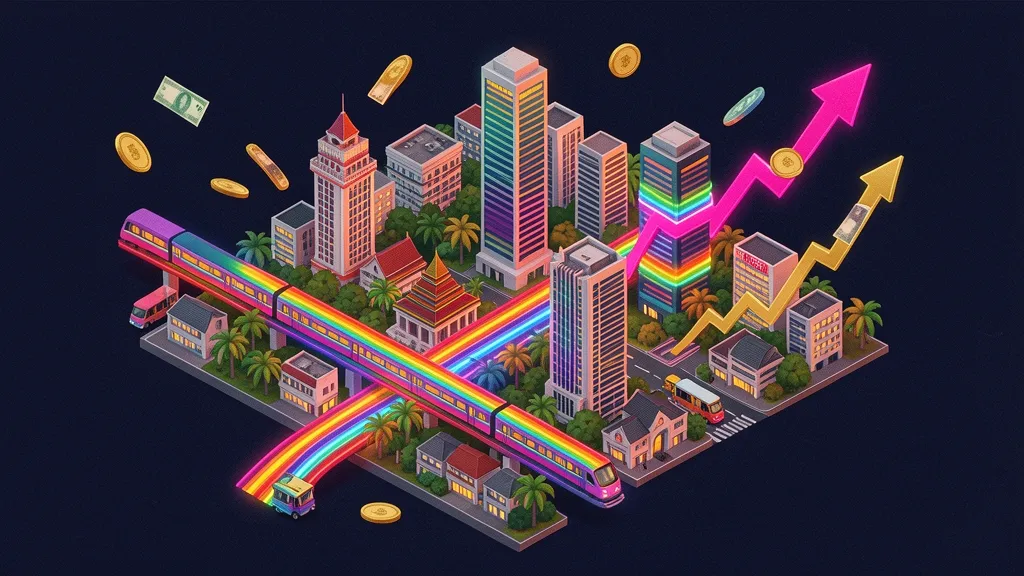
- ✓Thailand attracted an estimated 2.5 million LGBTQ+ visitors in 2025, generating $4.2 billion in direct tourism spending.
- ✓LGBTQ+ travelers spend 30-40% more per trip than general tourists, with higher preference for premium accommodation, dining, and wellness.
- ✓Marriage equality (effective January 2025) has unlocked a destination wedding and honeymoon market projected to add $800 million annually by 2028.
- ✓Thailand is the global leader in gender-affirming medical tourism, with over 20,000 international patients annually seeking procedures at JCI-accredited facilities.
- ✓TAT's "Go Thai Be Free" campaign and PrideShow's certified business directory are building the infrastructure for a world-class LGBTQ+ tourism ecosystem.
Thailand has long been a beacon for LGBTQ+ travelers. Even before the landmark Marriage Equality Act took effect in January 2025, the country had cultivated a reputation as Southeast Asia's most welcoming destination for queer visitors -- a place where Buddhist tolerance, vibrant nightlife, world-class hospitality, and affordable luxury converged to create something no other country in the region could match. Now, with marriage equality enshrined in law and a government actively courting the pink dollar, Thailand is positioning itself not just as an LGBTQ+-friendly destination but as the definitive global hub for queer travel.
This transformation is not merely symbolic. It is backed by hard economics, strategic government investment, and a private sector that increasingly recognizes the commercial opportunity in genuine inclusion. The pink tourism economy in Thailand is worth an estimated $4.2 billion in direct annual spending -- and it is growing faster than any other tourism segment in the country. For businesses, tourism operators, and community organizations, understanding this market is no longer optional. It is essential.
This guide examines the full picture: the macroeconomic forces driving pink tourism growth, the destinations leading the charge, the infrastructure being built to support LGBTQ+ travelers, and the practical steps businesses can take to participate in Thailand's pink economy renaissance.
Thailand's Tourism Economy: The Macro Picture
Tourism is not just an industry in Thailand. It is the engine of the national economy. In 2025, Thailand welcomed over 40 million international visitors, generating more than $62 billion in total tourism revenue and accounting for approximately 18% of GDP when indirect effects are included. The sector employs over 4 million people directly and supports millions more through supply chain linkages in food, transport, retail, and entertainment.
$62B+
Total tourism revenue in 2025
Thailand's tourism sector accounts for 18% of GDP when indirect effects are included
The Tourism Authority of Thailand (TAT) has been particularly strategic in its post-pandemic recovery. Rather than simply chasing volume, TAT has pivoted toward high-value tourism segments -- affluent travelers, wellness seekers, digital nomads, and crucially, LGBTQ+ visitors. This is not virtue signaling. It is a calculated bet grounded in data. The average LGBTQ+ traveler to Thailand spends approximately $1,680 per trip, compared to $1,200 for the general international visitor -- a premium of roughly 40%.
| Metric | General Tourist | LGBTQ+ Tourist | Premium |
|---|---|---|---|
| Average spend per trip | $1,200 | $1,680 | +40% |
| Average length of stay | 8.2 nights | 10.5 nights | +28% |
| Trips per year | 1.4 | 2.1 | +50% |
| Premium hotel preference | 34% | 58% | +71% |
| Dining spend (daily) | $28 | $42 | +50% |
| Wellness/spa spend | $45 | $78 | +73% |
These numbers tell a clear story. LGBTQ+ tourists stay longer, spend more per day, choose premium accommodations at nearly double the rate, and return more frequently. They are, by virtually every metric, the highest-value segment in Thailand's tourism portfolio.
The Pink Dollar: Understanding LGBTQ+ Tourism Economics
The global LGBTQ+ travel market is estimated at $218 billion annually, making it one of the largest identifiable niche segments in international tourism. Several structural factors explain why LGBTQ+ travelers disproportionately outspend their heterosexual counterparts. Dual-income households without children (the traditional DINK demographic) remain overrepresented in the LGBTQ+ community, resulting in higher discretionary travel budgets. Same-sex couples also tend to prioritize experiential travel -- culinary tours, cultural immersion, wellness retreats, adventure sports -- over passive beach holidays.
Global Pink Tourism Market
The global LGBTQ+ travel market is worth an estimated $218 billion per year. Thailand captures approximately 2% of this market, with a clear runway to reach 4-5% by 2030 through targeted infrastructure investment and marketing.
Thailand's share of this global market is growing rapidly. An estimated 2.5 million LGBTQ+-identifying visitors arrived in Thailand in 2025, up from approximately 1.8 million in 2023. The direct economic contribution of these visitors -- $4.2 billion -- represents roughly 6.8% of total tourism revenue, from a segment that constitutes approximately 6.25% of arrivals. In other words, LGBTQ+ visitors punch slightly above their weight in per-capita spending.
2.5M
Estimated LGBTQ+ visitors to Thailand in 2025
Up from 1.8 million in 2023. Direct spend estimated at $4.2 billion.
But the real story is in the trajectory. LGBTQ+ arrivals are growing at approximately 18% year-over-year, compared to 8% for general tourism. Three factors are driving this acceleration: marriage equality (which positions Thailand as a destination wedding hub), government marketing campaigns explicitly targeting LGBTQ+ travelers, and the organic amplification effect of social media, where queer creators increasingly feature Thailand as a top destination. When a Thai travel experience goes viral on TikTok or Instagram Reels, the effect on bookings is measurable within weeks.
Source Markets: Where Pink Tourists Come From
Understanding the geographic mix of LGBTQ+ arrivals is critical for businesses planning their marketing and service offerings. The top source markets reflect both proximity and cultural factors -- countries where LGBTQ+ identity is relatively open and where Thailand already has strong tourism brand recognition.
| Source Market | Share of LGBTQ+ Arrivals | Average Spend | Key Segments |
|---|---|---|---|
| China | 18% | $1,450 | Couples, nightlife, shopping |
| Australia | 14% | $1,820 | Beach, wellness, pride events |
| United States | 12% | $2,100 | Luxury, weddings, medical |
| United Kingdom | 9% | $1,750 | Culture, nightlife, diving |
| Japan | 8% | $1,380 | Culture, cuisine, wellness |
| Germany | 6% | $1,650 | Beach, eco-tourism, long stays |
| South Korea | 5% | $1,420 | Nightlife, shopping, K-culture overlap |
| Other ASEAN | 12% | $980 | Weekend getaways, events, nightlife |
| Rest of World | 16% | $1,580 | Mixed |
American LGBTQ+ travelers represent the highest per-trip spending, reflecting both the strength of the US dollar and a tendency toward premium experiences. Australian visitors, meanwhile, combine high spend with high frequency -- many return multiple times per year, treating Thailand as their default regional holiday destination. The Chinese market has rebounded strongly post-pandemic, with a notable shift toward couple-oriented travel following increased LGBTQ+ visibility in Chinese social media.
Go Thai Be Free: The Government's Pink Tourism Strategy
In 2023, the Tourism Authority of Thailand launched "Go Thai Be Free," the most ambitious government-backed LGBTQ+ tourism campaign in Southeast Asian history. The initiative was not a tentative toe in the water. It came with a dedicated budget of 500 million baht ($14.3 million) over three years, a dedicated marketing team, and an explicit mandate to position Thailand as the premier LGBTQ+ destination in Asia-Pacific.
“Thailand is not simply welcoming LGBTQ+ travelers. We are building an ecosystem where every touchpoint of the visitor journey -- from booking to departure -- reflects genuine inclusion and the Thai spirit of hospitality that we call sanuk.”
The campaign operates across several pillars. First, there is direct international advertising, with placements in LGBTQ+ media, partnerships with queer travel platforms like misterb&b and Purple Roofs, and sponsored content with high-profile LGBTQ+ travel influencers. Second, TAT runs a domestic training program -- the "Pink Star Hospitality" certification -- that equips hotels, restaurants, tour operators, and transport services with cultural competency training for serving LGBTQ+ guests. Over 2,800 establishments had completed the program by the end of 2025.
Third, and perhaps most strategically, TAT has invested in event infrastructure. The agency co-funds pride parades and LGBTQ+ festivals across the country, recognizing that events serve as powerful tourism magnets. Bangkok Pride, Phuket Pride, and Chiang Mai Pride have all scaled dramatically with TAT support, and the calendar now features at least one major LGBTQ+ event every month of the year -- a deliberate strategy to distribute tourist arrivals beyond the traditional peak season.
Pink Star Hospitality Certification
TAT's certification program trains businesses in LGBTQ+ cultural competency, inclusive language, and service standards. Over 2,800 establishments completed the program by end of 2025. Certified businesses receive a visible "Pink Star" decal, priority placement in TAT marketing materials, and access to the Go Thai Be Free partner portal.
Marriage Equality as Tourism Magnet
Thailand's Marriage Equality Act, which passed parliament in June 2024 and took effect on January 22, 2025, was a watershed moment not just for civil rights but for the tourism industry. Thailand became the first country in Southeast Asia and only the third in Asia (after Taiwan and Nepal) to legalize same-sex marriage. The ripple effects for tourism were immediate and substantial.
Within the first quarter of 2025, Thailand registered over 4,200 same-sex marriages -- more than 1,800 of which involved at least one foreign national. The destination wedding market, which was already significant for heterosexual couples (Thailand hosted over 15,000 international wedding ceremonies in 2024), expanded rapidly as LGBTQ+ couples recognized the unique combination of legal recognition, stunning venues, professional wedding planners, and dramatically lower costs compared to Western alternatives.
$800M
Projected annual destination wedding market for LGBTQ+ couples by 2028
Average LGBTQ+ wedding in Thailand costs $18,000-25,000 including travel, versus $50,000+ in the US or Europe
The economics are compelling. An average LGBTQ+ destination wedding in Thailand -- including ceremony, reception, accommodation for the couple and guests, and associated travel -- generates between $18,000 and $25,000 in direct spending. This compares to $50,000 or more for a similar celebration in New York, Sydney, or London. For couples seeking a legally recognized marriage in a breathtaking tropical setting at a fraction of the cost, Thailand has no real competitor in the Asia-Pacific region.
The wedding industry's multiplier effect is significant. Each destination wedding brings an average of 18 guests, each of whom spends an additional $2,200 on travel, accommodation, and activities during their stay. A single wedding can therefore generate over $55,000 in total economic impact. Hotel chains, event planners, florists, photographers, caterers, and transport companies across Thailand are actively developing LGBTQ+-specific wedding packages to capture this demand.
Beyond the wedding itself, marriage equality has created a honeymoon halo effect. Thailand is now a top-five honeymoon destination for same-sex couples globally, competing directly with the Maldives, Bali, and Hawaii. Resorts in Phuket, Koh Samui, and Krabi have reported 25-40% increases in LGBTQ+ couple bookings since the law took effect.
Destination Guide: Thailand's Top LGBTQ+ Hotspots
Thailand's appeal to LGBTQ+ travelers extends far beyond a single neighborhood or city. Each major destination offers a distinct flavor of queer-friendly tourism, from the cosmopolitan nightlife of Bangkok to the wellness retreats of Chiang Mai to the beach paradise of Phuket. Here is a comprehensive look at where LGBTQ+ travelers are going -- and what they are finding when they arrive.
Bangkok: The Capital of Queer Asia
Bangkok is the undisputed center of LGBTQ+ life in Southeast Asia. The city offers a depth and diversity of queer culture that rivals Amsterdam, San Francisco, or Berlin -- but at a fraction of the cost and with the added warmth of Thai hospitality. For LGBTQ+ visitors, Bangkok is not a city with a gay neighborhood. It is a city where queer life is woven into the urban fabric.
Silom Soi 2 and Soi 4 remain the historic epicenter of Bangkok's gay nightlife. DJ Station, the legendary nightclub that has anchored the strip for decades, continues to draw crowds alongside newer venues that cater to evolving tastes. But the scene has expanded dramatically beyond Silom. The Sathorn-Surawong corridor has become a hub for upscale LGBTQ+-friendly cocktail bars, rooftop venues, and restaurants. The Ari neighborhood in northern Bangkok has emerged as a magnet for young queer Thais and digital nomads, with a cluster of indie cafes, art galleries, and co-working spaces that cultivate an explicitly inclusive atmosphere.
Perhaps most interesting is the transformation of Yaowarat (Chinatown), where a new generation of queer-owned and queer-friendly bars and creative spaces have opened alongside the legendary street food stalls. The "Queer Chinatown" phenomenon -- driven by affordable rents and creative energy -- has attracted international press coverage and is drawing a younger, more culturally adventurous LGBTQ+ traveler who might not set foot in the traditional Silom scene.
- Silom Soi 2/4: Historic gay nightlife strip -- DJ Station, Stranger Bar, Telephone Pub
- Sathorn-Surawong: Upscale cocktail bars, rooftop venues, fine dining with inclusive policies
- Ari: Indie cafes, creative spaces, co-working -- popular with queer digital nomads
- Yaowarat (Chinatown): Emerging queer creative scene, affordable nightlife, street food tours
- Thonglor-Ekkamai: Premium nightlife, international crowd, LGBTQ+-friendly speakeasies
- Riverside: Luxury hotels (Mandarin Oriental, Capella) with dedicated LGBTQ+ wedding and event packages
Phuket: Pride Island
Phuket has earned its unofficial title as Thailand's "Pride Island." The Phuket Pride Festival, held annually in April, is now the largest pride celebration in Southeast Asia, drawing over 50,000 attendees in 2025 and generating an estimated $35 million in direct tourism spending during the event week. The festival has grown from a modest parade into a multi-day celebration featuring international performers, wellness workshops, art exhibitions, and a business conference focused on LGBTQ+ tourism.
Beyond the pride festival, Phuket's appeal to LGBTQ+ travelers is year-round. The island's resort wedding industry has become increasingly sophisticated in serving same-sex couples. Properties like Trisara, Amanpuri, and The Nai Harn have developed dedicated LGBTQ+ wedding packages, and a growing number of boutique wedding planners specialize exclusively in same-sex ceremonies. Patong Beach's Paradise Complex has been a hub for gay nightlife for over two decades, while newer venues in Kata and Kamala attract a more relaxed crowd.
The island's infrastructure for LGBTQ+ visitors is among the most developed in Asia. Over 200 Phuket establishments carry the TAT Pink Star certification, from five-star resorts to street food vendors. The Phuket LGBTQ+ Tourism Association, founded in 2024, coordinates marketing efforts and maintains a directory of certified businesses that meet inclusion standards.
Chiang Mai: Culture and Community
Chiang Mai offers something different from the beach-and-nightlife formula. Thailand's northern capital has become a global hub for queer digital nomads, drawn by the combination of affordable living costs, reliable internet infrastructure, a thriving co-working scene, and a culture of acceptance rooted in centuries of Lanna Buddhist tradition.
The city's LGBTQ+ scene is more community-oriented than nightlife-driven. Regular meetups, art exhibitions, film screenings, and discussion groups create a sense of belonging that short-term visitors and long-term residents alike value deeply. The Nimman area is the unofficial queer quarter, with a concentration of LGBTQ+-owned cafes, bookshops, and design studios. Chiang Mai Pride, while smaller than its Bangkok and Phuket counterparts, is notable for its integration of traditional Lanna culture -- temple ceremonies, lantern releases, and cultural performances that ground the celebration in local identity rather than imported Western formats.
For LGBTQ+ travelers interested in cultural tourism, Chiang Mai is unmatched. Temple tours, traditional cooking classes, hill tribe visits, elephant sanctuaries, and art workshops are all available through operators who have undergone LGBTQ+ sensitivity training. The city is also a gateway to adventure tourism in the northern highlands -- trekking, white-water rafting, and zip-lining through some of Thailand's most dramatic scenery.
Pattaya, Koh Samui, and Krabi
Pattaya's reputation precedes it, and for LGBTQ+ visitors the reality is more nuanced than the stereotypes suggest. Yes, the Boyztown entertainment district on Soi 3 remains a draw for those seeking vibrant nightlife. But Pattaya has invested significantly in diversifying its appeal. The Jomtien Beach area, south of the city center, has become a genuinely family-friendly LGBTQ+ destination, with boutique resorts, organic restaurants, and a more relaxed atmosphere. The annual Pattaya Pride celebration, reestablished in 2023 after a long hiatus, signals the city's intent to attract a broader LGBTQ+ demographic.
Koh Samui positions itself as the wellness and romance capital for LGBTQ+ travelers. The island's luxury resort segment -- properties like the Four Seasons, Ritz-Carlton Reserve, and Six Senses -- has embraced LGBTQ+ couples enthusiastically, recognizing them as a core part of the high-spending wellness tourism market. Spa packages, yoga retreats, detox programs, and couples' wellness journeys designed specifically for same-sex couples have become a significant revenue stream.
Krabi and its surrounding islands -- Railay Beach, Koh Phi Phi, Koh Lanta -- attract LGBTQ+ travelers seeking natural beauty and adventure. Rock climbing, kayaking, snorkeling, and island hopping in some of the most visually stunning landscapes on Earth, all within a culture of acceptance that means couples can hold hands on the beach without a second thought. Koh Lanta, in particular, has developed a reputation as a haven for queer couples seeking a quiet, romantic getaway away from the party scenes.
LGBTQ+-Friendly Business Infrastructure
A destination is only as welcoming as its businesses. Thailand's advantage in LGBTQ+ tourism is not just cultural tolerance or natural beauty -- it is the increasingly sophisticated infrastructure of businesses that actively serve and support queer travelers. This infrastructure spans accommodation, food and beverage, tour operations, transport, and professional services.
Certified Hotels and Accommodation
The Thai Hotel Association has worked with TAT and international organizations like IGLTA (International LGBTQ+ Travel Association) to develop Thailand's hotel inclusion standards. These go beyond basic non-discrimination policies. Certified properties train front-desk staff in inclusive language and pronouns, offer same-sex couple check-in without hesitation or awkward questions, provide LGBTQ+-relevant local information including safe nightlife recommendations, and ensure that marketing materials and website imagery are representative.
As of early 2026, over 850 hotels across Thailand carry some form of LGBTQ+ inclusion certification -- whether TAT Pink Star, IGLTA membership, or PrideShow verification. The range spans from international luxury chains (Marriott, Hilton, Accor -- all of which have corporate LGBTQ+ policies that extend to their Thai properties) to boutique hotels, hostels, and guesthouses run by LGBTQ+ owners. Platforms like misterb&b list over 3,200 LGBTQ+-friendly accommodation options in Thailand, the highest density in Asia.
Tour Operators and Experience Providers
A growing number of tour operators in Thailand either specialize in or explicitly welcome LGBTQ+ travelers. Companies like Purple Dragon, Out Adventures Thailand, and Bangkok Rainbow Tours offer curated itineraries that combine mainstream attractions with LGBTQ+-specific experiences -- nightlife tours, queer history walks, LGBTQ+-owned business visits, and cultural experiences that explore Thailand's rich history of gender diversity.
The key differentiator for these operators is not just the itinerary but the guides. LGBTQ+ travelers consistently report that having a guide who understands queer culture -- who can recommend the right venues, navigate cultural nuances, and create a space where couples feel comfortable being themselves -- transforms the travel experience from good to exceptional. Training programs for guides, supported by both TAT and PrideShow's CBaaS network of community facilitators, are expanding the pool of culturally competent operators across the country.
Medical Tourism: Thailand as a Global Leader in Gender-Affirming Care
Thailand's position as a global leader in medical tourism is well established -- Bumrungrad International, Bangkok Hospital, and other major facilities attract over 3.5 million international patients annually. What is less widely appreciated, particularly outside the LGBTQ+ community, is Thailand's dominance in gender-affirming healthcare.
20,000+
International patients seeking gender-affirming care in Thailand annually
Thailand performs more gender-affirming surgeries than any other country in Asia, with outcomes that rival the best Western facilities at 40-70% lower cost.
Over 20,000 international patients travel to Thailand annually for gender-affirming procedures, from hormone therapy consultations to complex surgical interventions. Thai surgeons -- particularly at institutions like the Suporn Clinic in Chonburi, Yanhee Hospital in Bangkok, and the Kamol Cosmetic Hospital -- are recognized globally for technical excellence, with outcomes data that meets or exceeds benchmarks set by leading Western facilities.
The cost differential is significant. Gender-affirming surgery in Thailand typically costs 40-70% less than equivalent procedures in the United States, United Kingdom, or Australia, even at JCI-accredited facilities with international-standard care protocols. For many trans individuals, particularly those from countries where procedures are either unavailable, prohibitively expensive, or subject to lengthy waiting lists, Thailand is not merely an option. It is the only viable path.
| Procedure | Thailand (USD) | USA (USD) | UK (USD) | Savings |
|---|---|---|---|---|
| Vaginoplasty | $8,000-15,000 | $20,000-50,000 | $15,000-30,000 | 50-70% |
| Phalloplasty | $15,000-25,000 | $50,000-150,000 | $40,000-80,000 | 60-80% |
| Top surgery (FTM) | $3,500-7,000 | $8,000-20,000 | $7,000-12,000 | 50-65% |
| Facial feminization | $8,000-20,000 | $20,000-60,000 | $15,000-40,000 | 50-70% |
| Hormone therapy (annual) | $300-600 | $1,500-3,000 | $500-1,200 | 50-80% |
Medical tourism for gender-affirming care is a distinct segment with its own dynamics. Patients typically stay in Thailand for 2-6 weeks depending on the procedure, and many combine their medical trip with tourism -- recovering at beach resorts, exploring cultural attractions during less intensive phases of their treatment, and often returning for follow-up visits that become their own tourism occasions. The total economic impact per medical tourist is estimated at $8,000-15,000 beyond medical fees, making this one of the highest-value segments in Thai tourism.
Thailand's cultural context adds a dimension that pure medical competence cannot capture. The Thai concept of "kathoey" and the broader Buddhist tradition of accepting gender diversity mean that trans patients experience a social environment far less hostile than what many encounter in their home countries. This cultural dimension -- the ability to recover in a society that does not stigmatize -- is frequently cited by patients as a decisive factor in choosing Thailand.
Cultural Context: Why Thailand Is Different
Thailand's LGBTQ+ friendliness is not a recent import or a marketing construct. It is rooted in cultural, religious, and historical factors that set the country apart from its neighbors and from many Western nations where acceptance is a more recent development.
Theravada Buddhism, practiced by over 93% of the Thai population, does not condemn homosexuality or gender diversity. The Buddhist concept of karma -- the idea that one's circumstances are shaped by past actions -- leads to a cultural framework that tends toward acceptance rather than judgment. The concept of "kathoey" (sometimes translated as "third gender") has been recognized in Thai society for centuries. While the reality is more complex than simple acceptance -- social class, family expectations, and regional differences all play a role -- the baseline cultural tolerance for gender and sexual diversity is markedly higher than in most of the region.
“In Thailand, the question was never whether LGBTQ+ people existed. The question was how to build a society that includes everyone. Marriage equality was not the beginning of acceptance -- it was the legal recognition of what Thai culture had already practiced for generations.”
This cultural foundation matters enormously for tourism. LGBTQ+ travelers consistently report that the "feel" of a destination -- the comfort of walking hand-in-hand with a partner, the absence of hostile stares, the natural warmth of service interactions -- matters as much as the specific attractions or amenities on offer. Thailand delivers on this dimension in a way that few countries can match. It is not just safe. It is genuinely comfortable, and the difference between safety and comfort is the difference between a tourist who visits once and one who returns again and again.
Historical precedent reinforces this comfort. Thai royalty and aristocracy have a documented history of gender diversity. Traditional Thai performance arts -- khon, likay, and cabaret -- have featured gender-fluid performers for centuries. And the modern visibility of LGBTQ+ Thais in entertainment, business, politics, and media creates a social landscape where queer existence is normalized rather than tokenized.
Safety and Practical Tips for LGBTQ+ Travelers
Thailand is one of the safest destinations for LGBTQ+ travelers in Asia, but as with any international travel, awareness and preparation enhance the experience. Here are practical considerations for LGBTQ+ visitors.
Legal Protections
Same-sex marriage is legal as of January 2025. Anti-discrimination protections based on sexual orientation and gender identity exist in the Gender Equality Act (2015), though enforcement varies. There are no laws criminalizing same-sex conduct. Trans individuals can change their gender marker on identity documents through a court process, and foreign visitors' documents are accepted as presented.
Social Norms and PDA
Thai culture generally discourages excessive public displays of affection (PDA) for all couples, regardless of orientation. In practice, holding hands and light affection are fine in urban areas and tourist destinations. In more conservative rural areas and around temples, discretion is appreciated -- not because of anti-LGBTQ+ sentiment specifically, but because Thai cultural norms favor modesty in public spaces generally. The key guideline: observe what Thai couples around you are doing, and match that level of PDA.
Practical Tips
- Book accommodation on LGBTQ+-specific or certified platforms (misterb&b, IGLTA members, TAT Pink Star properties, PrideShow-listed SMEs) for guaranteed inclusive service.
- Download the PrideShow directory app for real-time access to verified LGBTQ+-friendly businesses across Thailand.
- Carry a copy of your marriage certificate if traveling as a married same-sex couple -- while not legally required, it can smooth hotel check-in and hospital visits.
- Use Grab (ride-hailing) rather than street taxis for airport transfers and longer trips -- the app provides transparency on routing and pricing.
- For medical tourism: book consultations well in advance (top surgeons can have 6-12 month wait lists) and verify that your travel insurance covers the specific procedures.
- Learn basic Thai phrases -- "sawadee" (hello), "khob khun" (thank you), and "suay" (beautiful) go a long way. Thai people deeply appreciate the effort.
- Travel health insurance that explicitly covers LGBTQ+ health needs (including PrEP refills and STI testing) is recommended. Bangkok has multiple international-standard sexual health clinics.
LGBTQ+ Events Calendar: Year-Round Celebrations
One of Thailand's strategic advantages in LGBTQ+ tourism is the year-round calendar of events. Unlike destinations that concentrate queer visibility into a single pride week, Thailand offers a continuous stream of events that give LGBTQ+ travelers a reason to visit in any month. This distribution is not accidental -- TAT actively supports event promoters in scheduling festivals to avoid clustering, ensuring that the pink tourism calendar functions as a sustained economic driver rather than a seasonal spike.
| Month | Event | Location | Estimated Attendance |
|---|---|---|---|
| January | New Year Pride Beach Party | Phuket | 5,000 |
| February | Valentine's Pride Fest | Bangkok | 15,000 |
| March | Chiang Mai Queer Film Festival | Chiang Mai | 3,000 |
| April | Phuket Pride Festival | Phuket | 50,000+ |
| April | Songkran (Thai New Year) -- citywide queer celebrations | Bangkok / Chiang Mai | 200,000+ |
| May | Koh Samui Rainbow Week | Koh Samui | 8,000 |
| June | Bangkok Naruemit Pride | Bangkok | 120,000+ |
| June | PrideShow 2026 | BITEC Bangna, Bangkok | 20,000 |
| July | Pattaya Pride | Pattaya | 25,000 |
| August | Thai LGBTQ+ Film Festival | Bangkok | 5,000 |
| September | Krabi Rainbow Festival | Krabi | 4,000 |
| October | Queer Art Biennale | Bangkok / Chiang Mai | 10,000 |
| November | Loy Krathong Queer Night | Chiang Mai | 7,000 |
| December | World AIDS Day Commemorations | Nationwide | 30,000 |
PrideShow 2026: June 26-27
PrideShow 2026 at BITEC Bangna Bangkok is Thailand's premier B2B and B2C event connecting the pink economy ecosystem -- PLCs, NGOs, SMEs, and KOLs. Exhibitor tiers start at 35,000 THB. Early bird visitor registration is free.
See all upcoming pride events, festivals, and celebrations across Thailand and Asia-Pacific.
Browse the Full LGBTQ+ Events CalendarHow Thailand Compares to Other LGBTQ+ Travel Hubs
Thailand does not exist in a vacuum. LGBTQ+ travelers have global options, and understanding Thailand's competitive position requires honest comparison with other established queer travel hubs. The picture that emerges is one of distinct strengths that, taken together, create a value proposition no single competitor can match.
| Factor | Thailand | Amsterdam | Tel Aviv | Sydney | Mexico City |
|---|---|---|---|---|---|
| Marriage equality | Yes (2025) | Yes (2001) | No | Yes (2017) | Yes (2022) |
| Daily budget (mid-range) | $80-120 | $200-350 | $180-300 | $200-350 | $80-130 |
| Safety score (Equaldex) | 72/100 | 94/100 | 78/100 | 90/100 | 68/100 |
| Medical tourism | World-class | Limited | Strong | Strong | Growing |
| Beach/resort options | Exceptional | Limited | Good | Excellent | Good |
| Cultural depth | Deep | Deep | Deep | Good | Deep |
| Flight connectivity | Global hub | European hub | Regional hub | Asia-Pacific hub | Americas hub |
| Wellness tourism | World-class | Moderate | Good | Good | Growing |
| Gender-affirming care | Global leader | Available | Available | Available | Available |
| Year-round events | 12+ major events | 5-6 events | 3-4 events | 4-5 events | 4-5 events |
Thailand's standout advantages are cost competitiveness (a mid-range daily budget of $80-120 is less than half of Amsterdam or Sydney), the unrivaled combination of beach, culture, and city tourism within a single country, world-leading medical tourism infrastructure, and the sheer density of year-round LGBTQ+ events. Amsterdam offers deeper legal protections and a longer history of codified rights. Sydney and Tel Aviv offer higher safety scores. Mexico City matches Thailand on affordability.
But no single competitor combines all of Thailand's strengths. This is the country's structural advantage in the global LGBTQ+ tourism market: it is the only destination where a traveler can get a legally recognized same-sex marriage, recover from gender-affirming surgery at a world-class facility, attend a massive pride parade, relax on a tropical island, explore ancient temples, eat some of the best food on Earth, and do it all for a third of the cost of the nearest Western alternative. That combination is unique, and it is the foundation of Thailand's claim to be the next global LGBTQ+ travel hub.
Tapping the Pink Tourism Market: A Guide for Businesses
For Thai businesses -- hotels, restaurants, tour operators, wellness providers, wedding planners, medical facilities, and beyond -- the LGBTQ+ tourism market represents a high-value opportunity that requires genuine commitment rather than superficial gestures. Rainbow-washing (displaying pride flags without substantive inclusion practices) is not only ethically problematic -- LGBTQ+ travelers are sophisticated consumers who identify and penalize performative allyship through reviews and social media.
Here is what genuine participation in the pink tourism economy looks like, based on the practices of Thailand's most successful LGBTQ+-friendly businesses.
Steps to Becoming a Pink-Certified Business
- Audit your current practices: Review booking systems, check-in procedures, marketing materials, and staff training for assumptions about gender and orientation. Can same-sex couples book a double room without encountering confusion or hesitation? Does your website imagery include diverse couples?
- Invest in staff training: TAT's Pink Star program and PrideShow's CBaaS network offer cultural competency training delivered by LGBTQ+ community facilitators. Training should cover inclusive language, pronoun awareness, and practical scenarios for serving trans and non-binary guests.
- Update systems and policies: Ensure booking forms include non-binary title options. Update HR policies to explicitly protect LGBTQ+ employees. Review supplier relationships for alignment with inclusion values.
- Get certified: Apply for TAT Pink Star certification, IGLTA membership, or PrideShow SME verification. Certification provides credibility, marketing visibility, and access to the LGBTQ+ traveler network.
- Market authentically: List your business on LGBTQ+ travel platforms (misterb&b, Purple Roofs, PrideShow directory). Create content that speaks to LGBTQ+ travelers' specific needs rather than generic "everyone is welcome" messaging. Partner with LGBTQ+ influencers and KOLs for authentic promotion.
- Measure and improve: Track LGBTQ+-specific guest satisfaction metrics. Respond to reviews on LGBTQ+ platforms. Continuously evolve your offerings based on feedback.
List Your Business on PrideShow
PrideShow's SME directory connects LGBTQ+-friendly businesses with travelers, corporate partners, and event organizers. Verified listings include a Quality Score based on ratings, reviews, certification status, and community engagement. Registration takes 10 minutes.
Browse certified LGBTQ+-friendly hotels, restaurants, tour operators, and services across Thailand.
Explore PrideShow-Verified BusinessesRevenue Impact: What Businesses Can Expect
The business case for LGBTQ+ inclusion in tourism is not abstract. Based on data from PrideShow-verified businesses and TAT Pink Star certified properties, businesses that actively serve the LGBTQ+ market see measurable revenue impacts within the first year of certification.
| Metric | Before Certification | After Certification (Year 1) | Change |
|---|---|---|---|
| LGBTQ+ guest share | 8-12% | 22-35% | +150-200% |
| Average daily rate (LGBTQ+ bookings) | Standard | +15-25% premium | Higher yield |
| Repeat booking rate | 18% | 34% | +89% |
| Online review score | 4.1 avg | 4.4 avg | +7% |
| Wedding/event inquiries | Rare | 3-8 per month | New revenue stream |
| International booking share | 45% | 62% | +38% |
The repeat booking rate is particularly significant. LGBTQ+ travelers who find a business that genuinely welcomes them tend to become vocal advocates, driving word-of-mouth referrals that are extraordinarily valuable in a community where trusted recommendations carry more weight than advertising. A single positive TikTok review from an LGBTQ+ creator can generate hundreds of bookings over the following months.
The Road Ahead: Thailand's Pink Tourism Vision 2030
Thailand's aspirations for LGBTQ+ tourism are ambitious. TAT's internal target is to grow the segment to 4 million annual LGBTQ+ visitors by 2030, generating $7 billion in direct spending. Achieving this requires sustained investment in several areas.
Infrastructure expansion is first. The government is investing in upgrading transport links between LGBTQ+ tourism hotspots, including high-speed rail connections between Bangkok, Pattaya, and the Eastern Seaboard, as well as improved regional air connectivity to Chiang Mai, Krabi, and Koh Samui. A proposal to develop a dedicated LGBTQ+ tourism zone in the Eastern Economic Corridor -- combining resort, medical, and wellness facilities with event infrastructure -- is under active consideration.
Marketing investment will continue to scale. TAT plans to double the Go Thai Be Free budget to 1 billion baht by 2028, with a focus on emerging LGBTQ+ source markets including South Korea, India, and Latin America. Digital marketing -- particularly through partnerships with LGBTQ+ content creators and influencers tracked through platforms like PrideShow's KOL directory -- will be the primary channel.
The private sector is equally bullish. Major hotel groups are expanding their LGBTQ+-specific offerings, wedding planners are scaling capacity in anticipation of continued destination wedding growth, and a new generation of LGBTQ+-owned and LGBTQ+-focused travel startups is emerging across the country. The ecosystem is maturing rapidly, and the trajectory points to Thailand consolidating its position as the Asia-Pacific's undisputed LGBTQ+ travel leader within the next 3-5 years.
$7B
Target annual LGBTQ+ tourism revenue by 2030
TAT aims to grow from 2.5M to 4M LGBTQ+ annual visitors, nearly doubling direct economic impact from $4.2B to $7B.
Key Takeaways
- ✓Thailand's LGBTQ+ tourism market is worth $4.2 billion annually and growing at 18% year-over-year, outpacing general tourism growth by more than 2x.
- ✓Marriage equality has unlocked a destination wedding market projected at $800 million annually by 2028, with each wedding generating $55,000+ in total economic impact.
- ✓Thailand's unique combination of affordability, cultural acceptance, medical tourism leadership, and year-round event calendar creates a value proposition unmatched by any competitor globally.
- ✓Businesses that invest in genuine LGBTQ+ inclusion see measurable returns: 150-200% increases in LGBTQ+ guest share, 89% higher repeat booking rates, and access to new revenue streams.
- ✓The pink tourism opportunity extends across the entire value chain -- hotels, restaurants, tour operators, wedding planners, medical providers, wellness facilities, and more. The time to invest is now.
Thailand's pink tourism story is ultimately one of convergence: a culture of acceptance meeting strategic government investment, a maturing private sector, and a global LGBTQ+ community increasingly seeking destinations where they can be fully themselves. For travelers, Thailand offers an experience that goes beyond tolerance to genuine embrace. For businesses, it offers a market of extraordinary value and loyalty. And for Thailand itself, it offers a path to tourism leadership grounded in the most powerful competitive advantage of all -- authentic welcome.
June 26-27 at BITEC Bangna, Bangkok. Thailand's premier pink economy event connecting brands, communities, and change-makers.
Learn About PrideShow 2026PrideShow Editorial
Bangkok
Written by the PrideShow editorial team in Bangkok. Data-backed, community-informed, and always naming our sources. Want to write for Rert.? Pitch us at editorial@prideshow.org